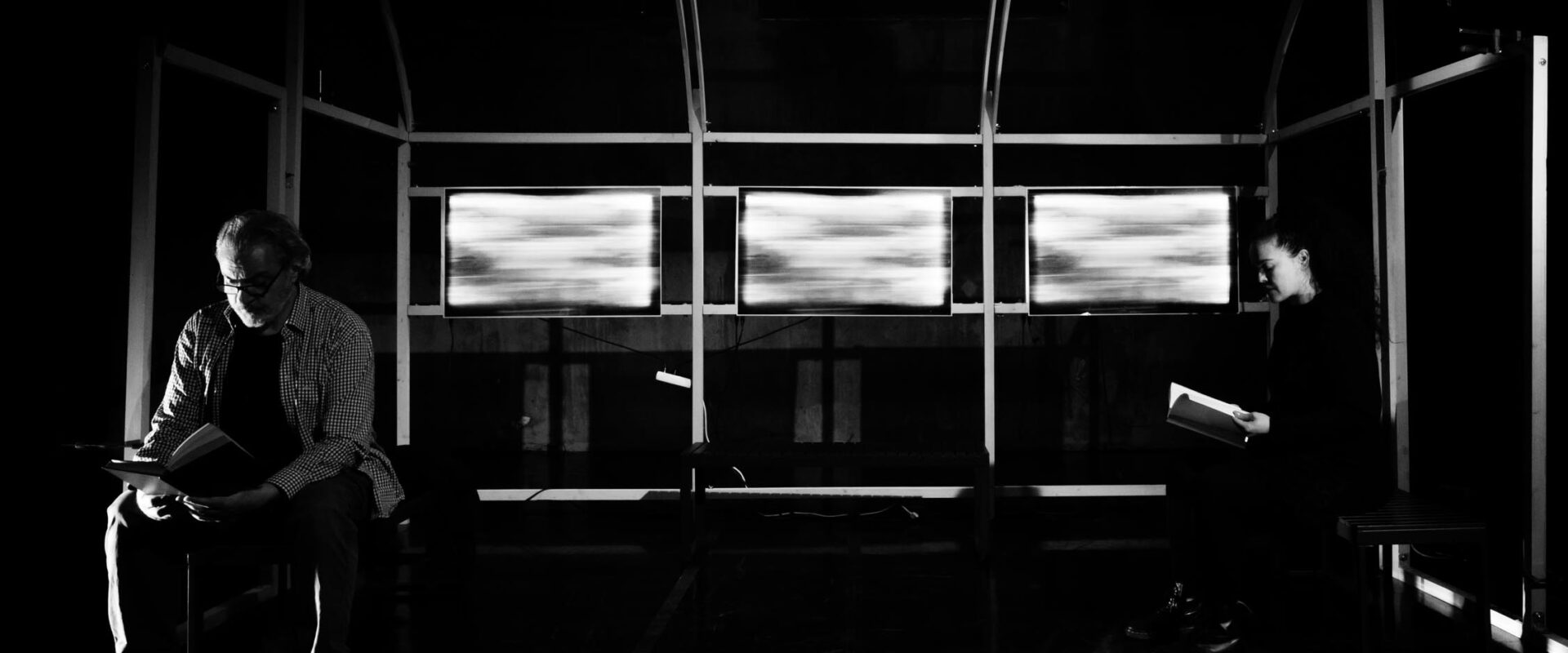
MENGELE
by Thanasis Triaridis
directed by Vana Pefani
Returning to PLYFA for the 2nd time before Zurich
Following the success of the production at PLYFA in October 2025 and its presentation in Zurich in January 2026 at Bühne S – Theater im Bahnhof Stadelhofen, where it will return in January 2027, “Mengele” returns to Athens.
The play by Thanasis Triaridis, directed by Vana Pefani, returns to PLYFA for 7 exclusive performances, from 8 to 17 October.
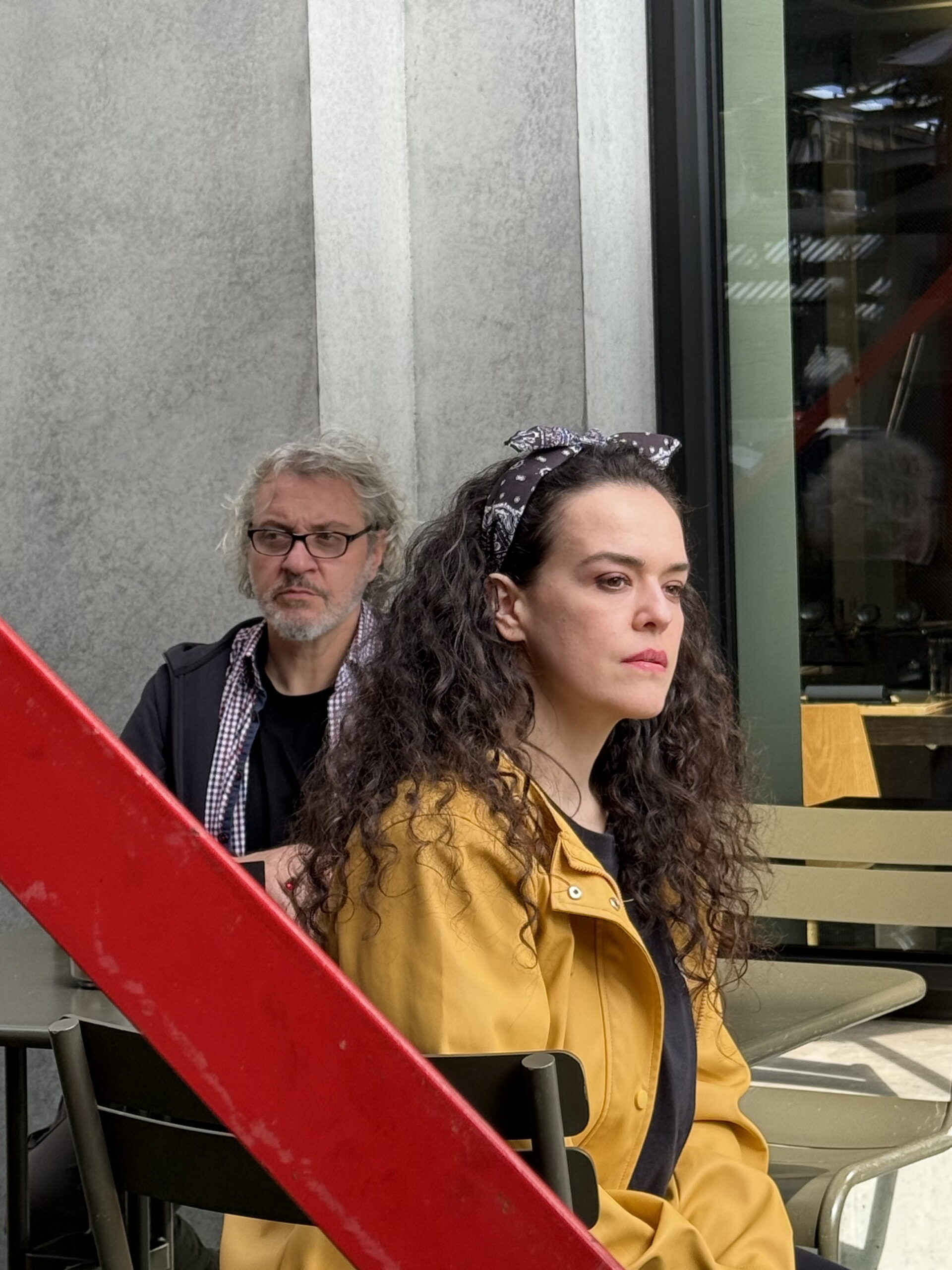
A gripping psychological thriller, filled with unexpected twists and chilling reflections on human nature, starring Giorgos Nasios and Eva Piadi, with live music and sound textures by Orestis.
From 8 October, and for seven performances only (8, 9, 10, 11, 15, 16 and 17 October), Athens audiences will have the opportunity to experience this unique production once again.
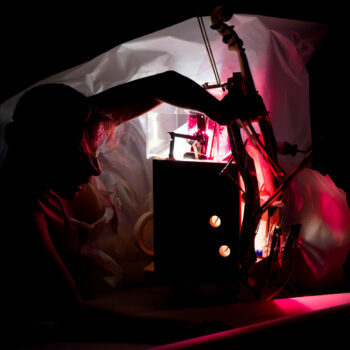
Vana Pefani creates an immersive theatrical experience inspired by real psychological experiments. The theatre becomes a laboratory, where the audience is invited to choose: will they take the position of the experimental subject or that of the researcher? This is not simply a performance, but an experience that demands active participation.
“Mengele”, a landmark work in Thanasis Triaridis’ dramatic writing, was written in 2012 and, over the course of a decade, has been presented at more than 15 different venues in Athens, in other cities across Greece, and in Cyprus. It is a text that attempts to confront one of the most unimaginable horrors of modern history: Josef Mengele’s infamous experimental laboratory at Auschwitz-Birkenau.
Today, at a time when the boundaries of human violence and morality are once again being tested, the play comes to shake us and remind us of the words of Italian-Jewish writer and Holocaust survivor Primo Levi: “What has happened once is certain to happen again.”
A few words about the story:
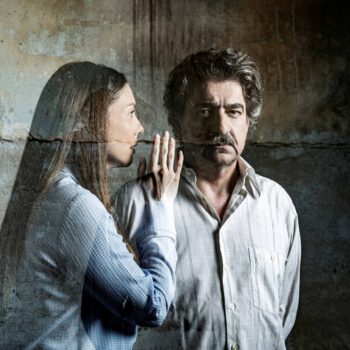
On a night journey aboard an electric train, an administrative employee and a PhD candidate in History — two complete strangers — find themselves sharing the same compartment. A sudden power outage leads them into a childhood role-playing game: he becomes the infamous “Angel of Death,” Josef Mengele, while she becomes Esther, the granddaughter of a Jewish survivor of his experiments.
But the game soon crosses the line. Are the two “players” merely acting, or are they revealing a terrifying truth? How far can they go when they play with History, morality, and human nature itself?
The Playwright’s Note:
For twelve years now, with every new production of this play, I have been confronted with the same question: “But why do you write about Mengele?” And I always give the same answer: “Because he existed — therefore, he can exist again at any moment. I write about Mengele because I want to demonstrate that the horror of the Holocaust is constantly present. Evil does not come from the heavens, nor from the depths of some nonexistent Hell. Evil is within us — and it takes an ethical struggle and cultural vigilance to ensure that we are not the ones who put people on trains bound for another Auschwitz.”
And I want to say something else. All my life I have written about the massacred civilians who are wiped out in the death laboratories of various forms of power. In my mind, Mengele’s twins stand alongside the enslaved children of all centuries, the children of massacred Indigenous peoples of the New Worlds, the mutilated victims of the Congo, the children being killed in Gaza, and the countless children of our world who die — or, more precisely, are killed — in Sub-Saharan Africa from hunger, poverty and deprivation. They belong to the great community of those unjustly slaughtered throughout History, to whom I feel I am accountable.
— Thanasis Triaridis
The Director’s Note:
“Mengele” is not a performance. It is an in-between space. A bardo of violence. Not the great, historical kind. The small kind. The silent kind. The individual kind. The everyday kind. The kind that has no screams, only whispers. That does not spill blood, but slowly corrodes.
The play’s two protagonists do not know whether they are still inside the experiment or outside it. They do not know whether they are perpetrators or victims. Perhaps neither do we.
Perhaps they are not people at all, but questions in human form. A light that comes on. A light that goes out. And a society watching — with nervous laughter? With indifference? Perhaps with horror? — an experiment that never ends.
The play is being staged now because we live in a world where words such as morality, conscience and responsibility are gritting their teeth. Because darkness is here — and it does not ask for answers, only that we acknowledge its existence. That we see it. And perhaps that is the most difficult thing of all.
— Vana Pefani
Duration: 80 minutes
Age recommendation: 16+
 13
13 18—19
18—19 23—24
23—24 26
26 29—30
29—30 02—04
02—04 18
18 23
23 24
24 29—30
29—30 31 Oct—01 Nov
 28 Oct—01 Nov
 12 Oct—16 Nov
 03 Oct—20 Nov
 12 Oct—24 Nov
 19—27
19—27 18 Nov—17 Dec
 30 Nov—22 Dec