POROSI 05: OREN AMBARCHI live in Athens
Opening Acts: Tropical Geometry + Savvas Metaxas
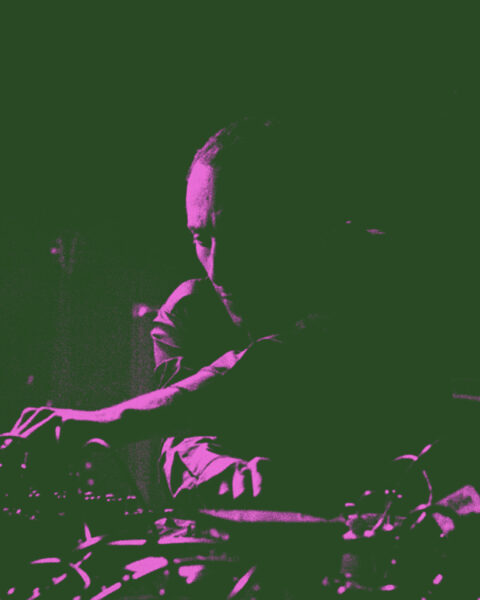
Oren Ambarchi‘s music exists at the intersection of various schools and influences: contemporary electronic music, improvisation, experimental minimalism, deceptive simplicity, latent rock physicality. Since the late 1990s, his experiments in guitar abstraction and extended technique have led to a more personal and unique sound world that incorporates a broader palette of instruments and sensibilities, with the spirits of Morton Feldman and Alvin Lucier periodically making their presence felt.
After all, we couldn’t expect anything less from a musician who was voted Experimental Artist of the Year (Pitchfork, 2014) and he continues to be truly groundbreaking.
On releases such as Grapes From The Estate and In The Pendulum’s Embrace, Ambarchi used, among other things, glass harmonica, strings, bells, piano, drums, and percussion, creating fragile textures, light and sometimes ethereal, which coexist marginally with the massive bass sounds coming from his guitar.
Ambarchi has performed, collaborated, and recorded with a wide range of artists such as Fennesz, Sunn 0))), Alvin Lucier, John Zorn, Merzbow, Jim O’Rourke, Fire! and many others.
He has released numerous recordings for labels such as Touch, Drag City, PAN, Southern Lord, and Kranky. His acclaimed trio with Keiji Haino and Jim O’Rourke performs in Tokyo every year, with many of their concerts recorded and released on Ambarchi’s Black Truffle label, which to date has released over 90 albums.
The release of Quixotism was included in The Wire magazine’s 50 best releases of 2014, and in the same year Pitchfork named him “Experimental Artist of the Year.” His 2016 album Hubris brought together an impressive cast of players including Crys Cole, Mark Fell, Arto Lindsay, Jim O’Rourke, Keith Fullerton Whitman, and Ricardo Villalobos, among others. Hubris was included in numerous “Best Albums Of 2016” lists in well-known magazines such as The Wire, Rolling Stone, The Quietus, and Tiny Mix Tapes.
In May 2019, London’s Cafe Oto celebrated Ambarchi’s 50th birthday and the 10th anniversary of the Black Truffle label with a three-day festival featuring an all-star international lineup.
Ambarchi’s upcoming new solo album, titled “Cooked,” will be released in September by Drag City. His latest release was the amazing “Shebang” (2022, Drag City), which featured Chris Abrahams, Johan Berthling, BJ Cole, Sam Dunscombe, Jim O’Rourke, Julia Reidy, Konrad Sprenger, and Joe Talia. His most recent collaboration was “Ghosted III” with Johan Berthling and Andreas Werliin, released in August 2025 by Drag City.
https://orenambarchi.com/
Tropical Geometry began as a multifaceted musical project among friends, which resulted in their studio album “Luck Mountain” (2021). Now operating as a dynamic duo (Babis Theocharis & Antonis Papadopoulos), they unfold their experimental pop music through their sonic explorations in the paths of Krautrock, psychedelia, and minimalism. The project’s live performances are extremely rare. In fact, in May 2025 they released their only live performance to date (Live recording 21.9.2024).
https://tropicalgeometry.bandcamp.com/
Savvas Metaxas is a musician and sound artist working in the fields of experimental music, field recordings, and modular synthesizers. With more than 15 releases on vinyl, CD, and cassette, his music has been released on numerous record labels, including LINE, Superpang, Granny Records, Glistening Examples, More Mars, Flaming, Pines, Coherent States, Falt, Grisaille, and he has performed in numerous concerts organized in experimental art spaces, music festivals, museums, galleries, and concert halls. His latest release is Feedback Poetics, released by The Tapeworm. In 2008, he co-founded the record label Granny Records, which focuses on releasing works by contemporary electronic musicians working in the fields of free improvisational music, noise, electroacoustic composition, and contemporary electronic music. His other projects include creating and composing sound for installations and site-specific performances, as well as music for short films, animated films, and contemporary dance.
https://savvasmetaxas.bandcamp.com/
More info: porosi.org
Doors 20.00
Savvas Metaxas 20.30 – 21.00
Tropical Geometry 21.15 – 21.45
Oren Ambarchi 22.00