This website uses cookies.

Learn more. Accept.
→
Αντιγράφηκε η διεύθυνση email

Archives: Events

3 WORKS INTRODUCTION

Alt text

3 WORKS INTRODUCTION
ASTERO STYLIANI LAMPRINOU

‎

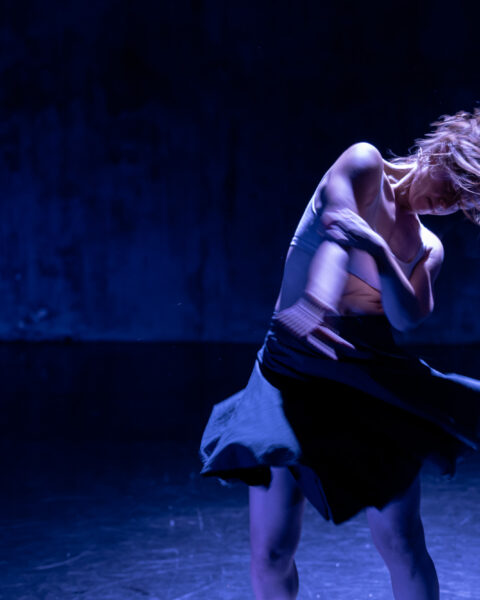
Choreographer Astero Styliani Lambrinou presents a distinctive, multidisciplinary performance from Thursday, 10 December, to Sunday, 13 December.

Alongside her solo performance, The Spirit, an allegory of concealing the visible and revealing the invisible, the artist will screen two original short films.

The first, Wall to Wall, is a fantasy created through three walls, two bodies, and a movement that sets everything in motion.

The second, Secret City, is a surreal journey through the city of Brussels, where visions of the past confront the present.

The performances are suitable for all ages.

TRAILER: https://youtu.be/_7nSB9paPK4


THE WORKS

SECRET CITY

Video: 15 minutes – 2020

Trailer: https://youtu.be/Os8WkzaCsDI

Synopsis:
Céleste and Terreste try to find each other during a short visit to the city of Brussels. Thanks to their mysterious ability to see the past, they discover the remnants and transformations of several iconic locations. During their fantastical journey, they experience Brussels as though it were a vast stage set, moving through remarkable outdoor and interior spaces.

Concept, choreography, direction: Astero Styliani Lamprinou
Performers: Ana Cembrero Coca and Astero Styliani Lamprinou
Director of Photography: Oliver Imfeld
Editing: Giorgos Lamprinos
Original Music: Philippe Létalon

‎

WALL TO WALL

Video: 13 minutes – 2020

Trailer: https://youtu.be/rPIc3Mk42cg

Synopsis:
A fantasy composed of three walls, two female bodies and a single movement: pushing. Pushing becomes a metaphor for human effort against walls, obstacles and the boundaries we ourselves impose on space. An ordinary little room in a city apartment is transformed into a laboratory of tactile sensuality.

Concept and Choreography: Astero Styliani Lamprinou
Performers: Estelle Delcambre and Astero Styliani Lamprinou
Original Music: Orfeas Mitsotakis
Set and Costumes: Astero Styliani Lamprinou
Camera: No Problem Production, Oliver Imfeld


THE SPIRIT

17-minute improvisational performance – 2026

An allegory of concealing the visible and revealing the invisible.

Concept: Estelle Delcambre, Asteró Stylianí Lambrinoú
Instant composition with structure, performance: Asteró Stylianí Lambrinoú
Music: François Couperin, Les Barricades Mystérieuses
Johann Sebastian Bach, Prelude and Fugue No. 2 in C Minor


BIOGRAPHY

Asterο (Styliani) Lamprinou, originally from Athens and currently based in Brussels, studied movement, dance and choreography at the Laban Centre and the London Contemporary Dance School. She completed her postgraduate studies at the University of Surrey with a scholarship from the A. Onassis Foundation.

She has worked primarily as a performer across various fields, including contemporary dance, opera, theatre, video and installation, in London, Ireland, Athens and Brussels. Her collaborations include Dance Theatre of Ireland, English National Opera and English National Theatre, as well as choreographers such as Joanne Leighton (repertoire), Yolande Snaith (opera), David Hernandez (installations) and Ana Cembrero Coca (physical theatre).

Her first dance film, Secret City (2020), is a choreographic journey through the city of Brussels. It was followed by Wall to Wall (2020). After creating the short dance trio Stones (2023), Asteró went on to develop the film Metropolitan Stones (2026) and the solo dance work Wallpaper (2026), with the support of French-speaking and Flemish institutions in Belgium and France.

Her work explores the relationship between body and space, dance, architecture and urban planning. She is fascinated by the coexistence of different styles and histories, and by the interplay between old and new in the urban landscape of Brussels, where she currently lives. However, her films are not solely about Brussels; they also speak to cities around the world that have undergone similar architectural transformations.

She is delighted to present her early short works in her home country, offering a brief introduction to her artistic world. Deeply connected to these early works, she believes they can inspire Greece’s vibrant and emerging dance scene.

Website: https://asterostylianilamprinou.com

Facebook: https://www.facebook.com/lamprinou.astero

Instagram: https://www.instagram.com/stylianilamprinou

‎

‎

‎

Performance duration: 45 minutes without interval
THE KILLER

Alt text

THE KILLER

by Mitsos Efthymiadis

‎

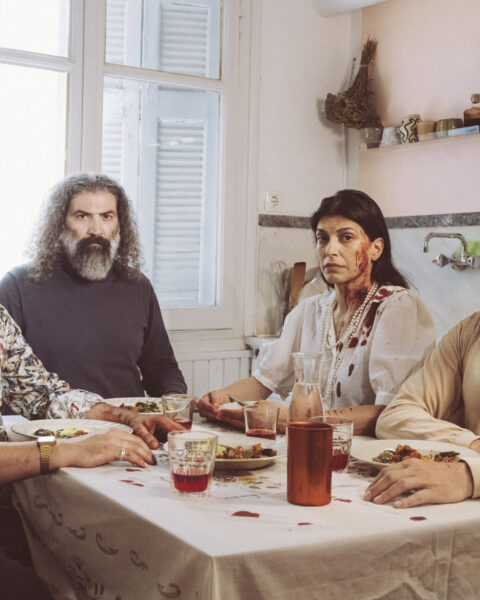
Who is the real killer?
The one holding the gun, or the one who learned to remain silent?

Some crimes end the moment they are committed.
Others continue to live on in memory, within families, in silences and in guilt.

This is the world illuminated by The Killer, the important contemporary Greek play by Mitsos Efthymiadis, directed by Dimitris Bitos and premiering on the 14th of November.

In a Greece that still carries its own wounds, the play acquires an unexpected relevance. Through four authentic theatrical characters and exemplary dramaturgical structure, Efthymiadis creates a psychological drama that speaks with striking clarity about violence, silence, family, guilt and responsibility, proving that some plays are written long before their time has come.

After years in prison, Savvas returns to the world he left behind, carrying the burden of a crime that has defined his life. His sister’s home becomes the setting for an unexpected encounter with people inextricably bound to his past. As the hours pass, old silences are broken, deeply buried secrets rise to the surface, and relationships built on fear, guilt and betrayal are pushed to their limits. The search for truth becomes a relentless psychological confrontation, in which every revelation overturns previously held certainties and forces the characters to confront not only what they have done, but also what they have chosen to remain silent about.

In The Killer, the crime is only the starting point. The real stakes lie in the social and human conditions that give rise to violence, shape consciousness and trap people in a vicious cycle of fear, silence and an inability to truly look one another in the eye. The characters are neither innocent nor guilty; they are deeply wounded people, trapped by their choices and by the circumstances that shaped them.

Director Dimitris Bitos approaches the play as a story that speaks directly to the present, placing the characters within a contemporary social context and bringing out the enduring power of the text.
‎

Director’s Note

“This is a contemporary Greek play, one of the few with such a strong structure and theatricality that allows us to bring it into the present and place its characters within a current context, shaped by the circumstances and issues of today, in a Greece that still lives with its wounds. Mitsos Efthymiadis’ four protagonists are four authentic theatrical characters who, within 90 minutes, touch upon the enormous problems facing our country today. Memories do not simply remain alive; they intensify, boil over and, at some point, explode. And from within that explosion emerges a great theatrical work that gives us the opportunity to read the present in multiple ways.”

— D. Bitos


Duration: 90 minutes
Age recommendation: 17+
*The show contains violent content and strong language

MENGELE

Alt text

MENGELE
by Thanasis Triaridis
directed by Vana Pefani
Returning to PLYFA for the 2nd time before Zurich

‎
‎

Following the success of the production at PLYFA in October 2025 and its presentation in Zurich in January 2026 at Bühne S – Theater im Bahnhof Stadelhofen, where it will return in January 2027, “Mengele” returns to Athens.

The play by Thanasis Triaridis, directed by Vana Pefani, returns to PLYFA for 7 exclusive performances, from 8 to 17 October.

A gripping psychological thriller, filled with unexpected twists and chilling reflections on human nature, starring Giorgos Nasios and Eva Piadi, with live music and sound textures by Orestis.

From 8 October, and for seven performances only (8, 9, 10, 11, 15, 16 and 17 October), Athens audiences will have the opportunity to experience this unique production once again.

Vana Pefani creates an immersive theatrical experience inspired by real psychological experiments. The theatre becomes a laboratory, where the audience is invited to choose: will they take the position of the experimental subject or that of the researcher? This is not simply a performance, but an experience that demands active participation.

“Mengele”, a landmark work in Thanasis Triaridis’ dramatic writing, was written in 2012 and, over the course of a decade, has been presented at more than 15 different venues in Athens, in other cities across Greece, and in Cyprus. It is a text that attempts to confront one of the most unimaginable horrors of modern history: Josef Mengele’s infamous experimental laboratory at Auschwitz-Birkenau.

Today, at a time when the boundaries of human violence and morality are once again being tested, the play comes to shake us and remind us of the words of Italian-Jewish writer and Holocaust survivor Primo Levi: “What has happened once is certain to happen again.”


A few words about the story:

On a night journey aboard an electric train, an administrative employee and a PhD candidate in History — two complete strangers — find themselves sharing the same compartment. A sudden power outage leads them into a childhood role-playing game: he becomes the infamous “Angel of Death,” Josef Mengele, while she becomes Esther, the granddaughter of a Jewish survivor of his experiments.

But the game soon crosses the line. Are the two “players” merely acting, or are they revealing a terrifying truth? How far can they go when they play with History, morality, and human nature itself?


The Playwright’s Note:

For twelve years now, with every new production of this play, I have been confronted with the same question: “But why do you write about Mengele?” And I always give the same answer: “Because he existed — therefore, he can exist again at any moment. I write about Mengele because I want to demonstrate that the horror of the Holocaust is constantly present. Evil does not come from the heavens, nor from the depths of some nonexistent Hell. Evil is within us — and it takes an ethical struggle and cultural vigilance to ensure that we are not the ones who put people on trains bound for another Auschwitz.”

And I want to say something else. All my life I have written about the massacred civilians who are wiped out in the death laboratories of various forms of power. In my mind, Mengele’s twins stand alongside the enslaved children of all centuries, the children of massacred Indigenous peoples of the New Worlds, the mutilated victims of the Congo, the children being killed in Gaza, and the countless children of our world who die — or, more precisely, are killed — in Sub-Saharan Africa from hunger, poverty and deprivation. They belong to the great community of those unjustly slaughtered throughout History, to whom I feel I am accountable.

— Thanasis Triaridis


The Director’s Note:

“Mengele” is not a performance. It is an in-between space. A bardo of violence. Not the great, historical kind. The small kind. The silent kind. The individual kind. The everyday kind. The kind that has no screams, only whispers. That does not spill blood, but slowly corrodes.

The play’s two protagonists do not know whether they are still inside the experiment or outside it. They do not know whether they are perpetrators or victims. Perhaps neither do we.

Perhaps they are not people at all, but questions in human form. A light that comes on. A light that goes out. And a society watching — with nervous laughter? With indifference? Perhaps with horror? — an experiment that never ends.

The play is being staged now because we live in a world where words such as morality, conscience and responsibility are gritting their teeth. Because darkness is here — and it does not ask for answers, only that we acknowledge its existence. That we see it. And perhaps that is the most difficult thing of all.

— Vana Pefani

‎

‎

‎

Duration: 80 minutes
Age recommendation: 16+

OREN AMBARCHI LIVE

Alt text

POROSI 05: OREN AMBARCHI live in Athens 
Opening Acts: Tropical Geometry + Savvas Metaxas


Oren Ambarchi‘s music exists at the intersection of various schools and influences: contemporary electronic music, improvisation, experimental minimalism, deceptive simplicity, latent rock physicality. Since the late 1990s, his experiments in guitar abstraction and extended technique have led to a more personal and unique sound world that incorporates a broader palette of instruments and sensibilities, with the spirits of Morton Feldman and Alvin Lucier periodically making their presence felt.

After all, we couldn’t expect anything less from a musician who was voted Experimental Artist of the Year (Pitchfork, 2014) and he continues to be truly groundbreaking.

On releases such as Grapes From The Estate and In The Pendulum’s Embrace, Ambarchi used, among other things, glass harmonica, strings, bells, piano, drums, and percussion, creating fragile textures, light and sometimes ethereal, which coexist marginally with the massive bass sounds coming from his guitar.

Ambarchi has performed, collaborated, and recorded with a wide range of artists such as Fennesz, Sunn 0))), Alvin Lucier, John Zorn, Merzbow, Jim O’Rourke, Fire! and many others.

He has released numerous recordings for labels such as Touch, Drag City, PAN, Southern Lord, and Kranky. His acclaimed trio with Keiji Haino and Jim O’Rourke performs in Tokyo every year, with many of their concerts recorded and released on Ambarchi’s Black Truffle label, which to date has released over 90 albums.

The release of Quixotism was included in The Wire magazine’s 50 best releases of 2014, and in the same year Pitchfork named him “Experimental Artist of the Year.” His 2016 album Hubris brought together an impressive cast of players including Crys Cole, Mark Fell, Arto Lindsay, Jim O’Rourke, Keith Fullerton Whitman, and Ricardo Villalobos, among others. Hubris was included in numerous “Best Albums Of 2016” lists in well-known magazines such as The Wire, Rolling Stone, The Quietus, and Tiny Mix Tapes.

In May 2019, London’s Cafe Oto celebrated Ambarchi’s 50th birthday and the 10th anniversary of the Black Truffle label with a three-day festival featuring an all-star international lineup. 

Ambarchi’s upcoming new solo album, titled “Cooked,” will be released in September by Drag City. His latest release was the amazing “Shebang” (2022, Drag City), which featured Chris Abrahams, Johan Berthling, BJ Cole, Sam Dunscombe, Jim O’Rourke, Julia Reidy, Konrad Sprenger, and Joe Talia. His most recent collaboration was “Ghosted III” with Johan Berthling and Andreas Werliin, released in August 2025 by Drag City.

https://orenambarchi.com/


Tropical Geometry began as a multifaceted musical project among friends, which resulted in their studio album “Luck Mountain” (2021). Now operating as a dynamic duo (Babis Theocharis & Antonis Papadopoulos), they unfold their experimental pop music through their sonic explorations in the paths of Krautrock, psychedelia, and minimalism. The project’s live performances are extremely rare. In fact, in May 2025 they released their only live performance to date (Live recording 21.9.2024).

https://tropicalgeometry.bandcamp.com/


Savvas Metaxas is a musician and sound artist working in the fields of experimental music, field recordings, and modular synthesizers. With more than 15 releases on vinyl, CD, and cassette, his music has been released on numerous record labels, including LINE, Superpang, Granny Records, Glistening Examples, More Mars, Flaming, Pines, Coherent States, Falt, Grisaille, and he has performed in numerous concerts organized in experimental art spaces, music festivals, museums, galleries, and concert halls. His latest release is Feedback Poetics, released by The Tapeworm. In 2008, he co-founded the record label Granny Records, which focuses on releasing works by contemporary electronic musicians working in the fields of free improvisational music, noise, electroacoustic composition, and contemporary electronic music. His other projects include creating and composing sound for installations and site-specific performances, as well as music for short films, animated films, and contemporary dance.

https://savvasmetaxas.bandcamp.com/

More info: porosi.org


Doors 20.00

Savvas Metaxas 20.30 – 21.00

Tropical Geometry 21.15 – 21.45

Oren Ambarchi 22.00


GEESE

Alt text

GEESE
2nd year

Stella Zafeiropoulou

‎

‎

Following a successful debut, “Geese” returns to PLYFA for a second year.
This season, Maria Antoulinaki takes on the role of Kyriaki.

‎

In a small provincial town, nothing stays hidden for long. Sofia is a young woman adopted by Kyriaki. Her ancestry constantly become a source of conflict between them, while the comments and interference of those around them further destabilize their fragile balance. As Kyriaki secretly struggles with questions surrounding the management of her property and her inheritance, Sofia experiences love and believes she has finally found happiness. However, the revelations that follow will overturn everything, leading them toward unpredictable and tragic developments.

Geese, the award-winning play by Stella Zafeiropoulou (Greek Screenwriters’ Union Award, 2017), is presented for the second time on stage at PLYFA Theatre from November 18, 2026. It is a story that dares to confront deeply rooted prejudices about parenthood, biological lineage, fear of the foreign and the different, the difficulty of integrating it into our culture — as well as an insatiable love of money.

Stella Zafeiropoulou, one of the most dynamic representatives of the new generation of Greek playwrights, who was recently nominated for the “Karolos Koun” Award for Greek dramaturgy for her play Fly (2025, Olvio Theatre), directs the play herself this time. Presenting her first directorial work on the Greek theatrical stage, she notes about Geese:

Geese is a story of selection. Of children in institutions, of the children who were chosen and those who stayed behind. But there’s more than that. It is also the story of a mother and daughter who never truly saw one another as such, as well as the ongoing narrative of a segment of people who make up small communities and who hypocritically and quite unorthodoxly preserve the old roots of these societies in barren soil when it comes to welcoming the foreigner into their “ancestral lands.” I consider it important that my works originate from real events and engage with a reality that I construct using theatrical terms. The same applies here:  Geese is based on a story that came to me and served as a starting point for creating images. This is also what I want to do with my direction — to highlight the images of the text, and why not, to create new ones. And as time passes and I study Geese from the outside, no longer as their creator, I increasingly feel my detachment from the text and my connection to it under different terms. What I know for certain, however, is that whether in one way (as a writer) or another (as a director), what I need to do is place it on tracks along which it can move smoothly and without obstruction.

‎

‎

‎

Duration: 100 minutes, no intermission

*Exceptionally, during the second week of December, performances will take place on Monday and Tuesday, December 7 & 8, 2026.

flux_playground

Alt text

flux_playground

multimedia performance

Fani Arapi, Kostas Daflos

ㅤ
ㅤ

‎ ‎‎Distinction: “2026 Performing Arts Award” by the Hellenic Association of Theatre and Performing Arts Critics.
‎ㅤ

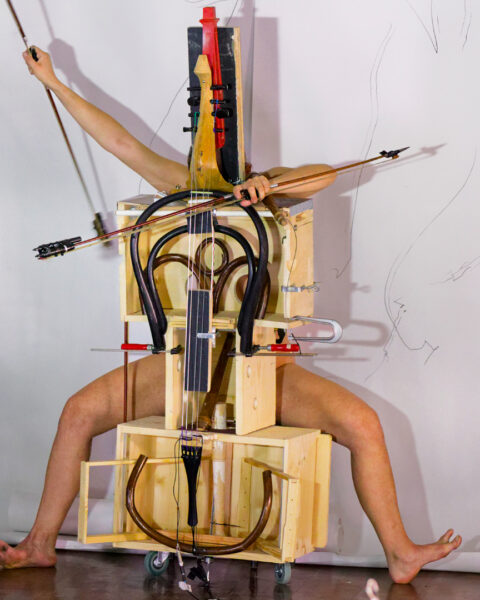
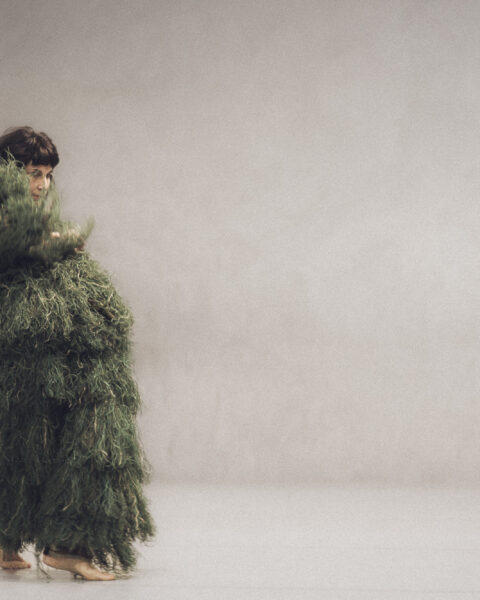
Flux Playground is a fluid field where the body encounters sound, movement, visual installations, scenographic space and interactive technologies. It is a multimedia performance featuring three string arrangements within a fluid paper material space. In the solo performance, bodily space is redefined through the creation of paper garments, soundscapes and drawings in motion. In the performative installation, the body seeks ways of operation and integration in dialogue with the active objects (the arrangements, the interactive improvised musical instruments, the paper surfaces, etc.). The dialogical musical sculptures emerged from the bricolage of furniture elements and micro-materials, as well as through the reuse and recycling of toy robots.
‎
‎
A choreographic performance is an ongoing action in process that combines dance and body movement with the visual act. It is a reference to experimental body performances of Charlotte Moorman and Nam June Paik (Fluxus Cello, 1969), -Christo and Jeanne-Claude’s (Wendy, Wedding Dress, and Evening Dress, 1967), the early robotic art of Akira Kanayama (Painting Machine, 1957), and the Gutai avant-garde.

‎‎
Fani Arapi is a visual artist who graduated from Aristotle University of Thessaloniki and holds a postgraduate degree from the Department of Audio and Visual Arts at the Ionian University. Her practice focuses on performance art and multimedia installations.
‎
‎
Kostas Daflos is a professor at the Athens School of Architecture at the National Technical University of Athens. He creates dialogical and interactive installations using technologies through performative spatial practices.
‎
‎
‎
flux_playground.gr
‎
‎
‎
‎
Duration: 75 minutes (no intermission)

WHERE DO WE MEET

Alt text

Where Do We Meet

LUNA PARK / Nikoleta Koutitsa


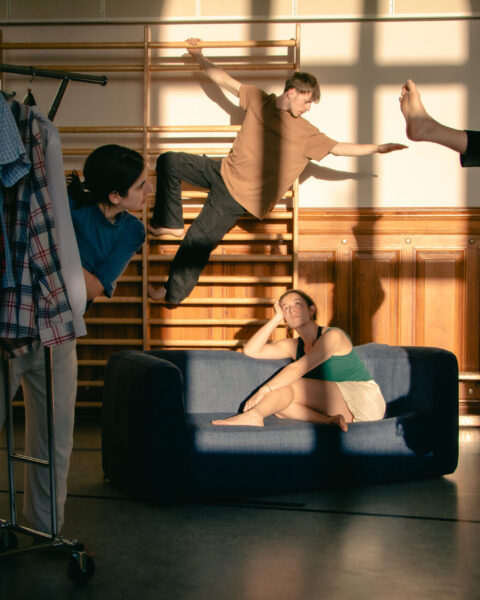
How do we come together? What holds us together? And what remains when the structures we rely on begin to disappear? Where Do We Meet is a choreographic work for five performers exploring the shifting architecture of human relations. Bodies, objects, and space continuously influence one another, creating temporary systems of orientation that emerge only to dissolve again. Familiar situations appear, drift out of balance, and reorganize into unexpected constellations.

Rather than presenting movement as fixed choreography, the work unfolds through processes of listening, responding, and adapting. Relationships are constantly redefined as the performers negotiate proximity and distance, rhythm and hesitation, individuality and collectivity. Every encounter leaves a trace. Every action reshapes the conditions for what follows.

The stage itself becomes a living landscape in continuous transformation, where stability is momentary and change is the only constant. As points of orientation disappear, new possibilities for connection begin to emerge.

Without narrative or resolution, Where Do We Meet invites the audience into an experience of coexistence in motion. It is less concerned with where we meet than with the fragile and ever-changing conditions that make meeting possible.


Where Do We Meet is a production by Initiative LUNA PARK e.V. and Nikoleta Koutitsa, created in collaboration with Gesundbrunnen Primary School and the Greek association LOUNA PARK ERGA. The production is supported through the project “Kiez in Bewegung / Berlin”, funded by Deutsche Fernsehlotterie and the Berlin Senate Department for Culture and Community, as well as supported by the German-Greek Youth Office (DGJW) as part of the exchange project “How to dance in times of crisis?”.


Duration: approximately 55 minutes without intermission
Suitable age: The performance is suitable for everyone aged 4 and over.

LUNAPARK.works 09

Alt text

LUNAPARK.works 09

LUNA PARK

As part of the 12th International Meeting of Emerging Dance Professionals, “How to dance in times of crisis?”, taking place in Athens, LUNA PARK presents the ninth edition of its collective performing arts platform LUNAPARK.works. Admission is free, and voluntary donations are welcome.

The international exchange programme “How to dance in times of crisis?” has been organised by LUNA PARK since 2016, aiming to support the artistic development of emerging dance artists through regular encounters in Berlin and Athens. As part of LUNAPARK.works 09, participants present short solo and group choreographic works, some of which are still in development (work in progress).

How does our perception of art change during periods of profound social transformation and local or global crises? How is our artistic expression affected? Do we dance differently in times of crisis? Can dance bring about change, even beyond the theatre? The emerging dance professionals participating in the programme explore these questions through lectures, seminars and discussions, as well as theoretical and philosophical approaches to the creation and critical reflection of contemporary dance and performance art. Experienced choreographers and dance researchers provide artistic guidance, lead workshops in choreography and improvisation, and facilitate collective rehearsals. Particular emphasis is placed on developing the participants’ individual and collaborative artistic works, which are presented as part of LUNAPARK.works 09.


LUNAPARK.works 09 is a platform for dance, performance and artistic exchange organised by Initiative LUNA PARK e.V. in collaboration with the Greek non-profit organisation LOUNA PARK ERGA. It is funded by the German-Greek Youth Office (DGJW/EGIN) as part of the international exchange programme “How to dance in times of crisis?”, with additional support from the Berlin Senate Department for Culture and Community and AKTINA, a recognised Higher Professional Dance School in Athens.

Founded in 2002 as an initiative of independent artists, LUNA PARK has been active in contemporary dance for more than 20 years. Its work includes contemporary dance productions and performances in Germany, Greece and internationally, a wide range of extracurricular arts education programmes for children, teenagers and young adults, as well as international exchange programmes and encounters for emerging dance professionals and dance educators.


Performance Program

Thursday, 29 October 2026
_ “We // again” (15’), duet by Foteini Dritsakou and Gabriela Kokkini, sound supervision: Titos Grigoropoulos
_ “The Swan” (4’), solo by Mofei Hao
_ “What’s in my fantasy?” (6’), solo by Angeliki Liakopoulou
_ “Maja” (15’), duet by Eleonora Cirelli and Veronica Sala
_ “The impossible task” (17’), solo by Elina Kavalaki, music: Saxo
_ “Preferable Indifferents” (10’), solo by Emmanouela Antivasi, live music: Foivos Gouvas

Friday, 30 October 2026
_ “AIGOL” (17’), duet by Myrsini Shaqiri and Roza Tsigalida, sound design: Nikolas Koutsothanasis, costumes: Anastasia Christoforidou
_ “Ciao Mer” (5’), solo by Ida Aga Zinnen
_ “Arumbai” (10’), solo by Jirmeja Pattianakotta
_ “Crane fly” (10’), group work by Noah am Ende, created in collaboration with Veronica Sala, Eleonora Cirelli and Dafni Stathatou
_ “Photo-synthetic” (10’), solo by Caspar Sebastian Stuart Ilschner
_ “Minus Six” (25’), group work by Angeliki Liakopoulou, Eleni Charikiopoulou, Elina Kavalaki, Myrsini Georgopoulou Shaqiri, Niovi Papandreou and Zoi Tragidi


Duration: 90 minutes, including short breaks
Suitable age: The performance is suitable for everyone aged 16 and over. In certain scenes of the performance, loud sounds, intense lighting effects (strobe light), and darkness are used.

KANE LIGO PIO KEI

Alt text

Kane ligo pio kei

Mutabor

‎

October 3, 4, 10, 11 & 17 and November 13 & 20, 2026
EXTRA PERFORMANCES November 16 & 27
‎

Stench. We’re surrounded by corpses again.

The Mutabor theatre company presents the original play Kane ligo pio kei, a performance that explores, through the absurd, the grotesque and the painfully familiar, the human need for freedom, the burden of social roles, family, love, alienation and death.

In an apartment.

High-ceil-inged. Clut-tered.

Inside, a Lady, a Maid, a son, Lo, and between them, the corpses.

Always inside.

Locked in the house, they try to digest the roles they believe life has forced upon them.

But what happens when someone decides not to obey? Resisting social conventions can bring freedom. But is everyone capable of handling the weight of being free?
‎
‎

The Play

In a high-ceilinged, cluttered apartment lives Lo’s family: the Lady, his mother, a Maid, and corpses.

Lo works as a corpse cleaner. His daily encounters with the dead exhaust him, while at the same time becoming, paradoxically, a form of liberation.

The Lady constantly demands that he fulfil roles, identities, wishes and chores. She grows increasingly irritated; the more pressure he is under, the more he rises up against her.

Completing the picture is the Maid, who is constantly searching for her mop.

And the corpses? Like conductors, they shape the flow of the story as the characters gradually begin to lose their sense of self and their certainties.

Until a letter disrupts the fragile balance.

In the end, if you free yourself from the role you were given, are you ready to take responsibility for your freedom?

‎
‎

The Performance

Kane ligo pio kei places at its centre the responsibility that comes with shedding social roles.

In a society that demands that we all be functional, useful and accepted, what price does someone pay when they refuse to conform to the profile of the “healthy”, socially acceptable person?

What happens when someone does not want to perform the role assigned to them? How much alienation and loneliness can freedom conceal? And how easily does difference become deviation, and deviation become stigma?

In the world of the play, the corpses embody the doubt that arises when people feel inadequate in the face of what is expected of them.

Why do we build our own prison and remain inside it, even when there is an escape plan?

And ultimately: do the characters find liberation, or do they remain imprisoned?

‎
‎
‎

Duration: 80 minutes

SCENIUS SOUND 001

Alt text

SCENIUS SOUND 001

The Athenian scene in dialogue with the international avant-garde

‎

The first SCENIUS SOUND brings an entire evening of experimental and improvised music, live performance and visual art to PLYFA. A journey between the international avant-garde and Athens’ contemporary music scene.

In Building 7A, new formations, international artists and musicians from the Athens scene come together through successive performances and new collaborations.


THE MESSTHETICS & JAMES BRANDON LEWIS

The Messthetics & James Brandon Lewis make their first appearance in Athens, and we are delighted to welcome them to the first SCENIUS SOUND.

Joe Lally on bass and Brendan Canty on drums, the rhythm section of the legendary Fugazi, join Anthony Pirog on guitar and James Brandon Lewis on tenor saxophone. Together they connect the energy of post-hardcore with jazz, improvisation and experimental sound.


KOPER8

Ingrid Laubrock (saxophones), Tom Rainey (drums), Jannis Anastasakis (guitar, electronics) and Giuseppe Doronzo (baritone saxophone) come together as KOPER8, a new international quartet moving freely between composition and improvisation. They come to Athens as part of the European tour for their debut album.


GIORGOS XYLOURIS / THODORIS ZIARKAS / NIKOS THESSALONIKEFS

Giorgos Xylouris, Thodoris Ziarkas and Nikos Thessalonikefs form a new trio especially for SCENIUS SOUND 001, connecting the Cretan musical tradition with improvisation and contemporary approaches to rhythm and sound.


FAUDUJUDU

Italian saxophonist Fausto Sierakowski, drummer Dimitris Klonis and guitarist Jannis Anastasakis form a newly founded improvising trio. Saxophone, guitar, drums, bass synth and live electronics meet without predetermined forms.


INK & SOUND  by VINCENT DE BOER

Dutch visual artist and calligrapher Vincent de Boer connects calligraphy with movement, rhythm and sound. Known as the unofficial fifth, and only non-musical, member of Ill Considered, he hand-paints their record covers. At SCENIUS SOUND he creates in ink live, alongside the musicians on stage, in a specially designed space inside the hall.


STOMA  (LIE-DOWN CONCERT)

The programme concludes with STOMA: Spyros Evangelatos on baritone guitar, electronics and voice, Apostolis Vasilopoulos on electric guitar, and Petros Kolotouros on drums and percussion. The trio uses improvisation to explore the outer reaches of electric and electronic sound.

The audience is invited to lie down and listen, in complete darkness, to a final performance of spontaneously composed music, an entirely different mode of listening.

Admission is first-come, first-served, subject to the capacity of the hall.


‎

‎

Duration: Approximately 5 hours. There is no scheduled intermission; performances follow one another with short transitions in between.
Suggested for: 16+